ADA Portable Toilet Demands for Obtainable Mobile Device Positioning
Accessibility obtains reviewed in wide principles so typically that the functional information can obtain lost. That is specifically true with short-term sanitation. A festival coordinator may invest weeks thinking of ticketing, traffic flow, fencing, and waste pickup, after that realize late while doing so that an ada mobile bathroom is not just an additional box to put on a site map. Positioning matters. Path issues. Entry problems matter. The device itself matters.
I have seen obtainable preparation handled well, where the available mobile toilet was put specifically where a guest using a mobility device would fairly expect to find it, on a firm course, near the main task. I have also seen the opposite, where the so called accessible device was technically present but stranded on uneven ground behind a row of conventional systems, transforming a standard demand right into an irritating detour. The difference is rarely around intent alone. It normally boils down to whether the planner comprehends what the ADA in fact calls for and just how those needs turn up on the ground.
For mobile commode services in the United States, the managing government availability standard is the 2010 ADA Criteria for Accessible Style, as interpreted by the Accessibility Board and the Division of Justice. That is the anchor factor. If you are arranging ada compliant mobile restrooms for a public occasion, an area gathering, a park improvement, or any type of various other momentary setup open up to the general public, those criteria are the location to start.
The core rule individuals miss out on first
The scoping demand is easy, but it is usually undercounted or misinterpreted. For clusters of portable solitary individual toilet units, at least 5 percent of the devices in each collection need to be accessible. The Accessibility Board has actually made clear that this uses even at short-term events.
That phrase, "in each collection," matters more than lots of people understand. If a website has one bank of units near the entryway and another financial institution near a phase or sports field, the evaluation is not almost the complete number of units on the home. Each organizing needs its own look. An organizer can not put one ada compliant mobile bathroom on one side of a large venue and assume that solves availability everywhere else.
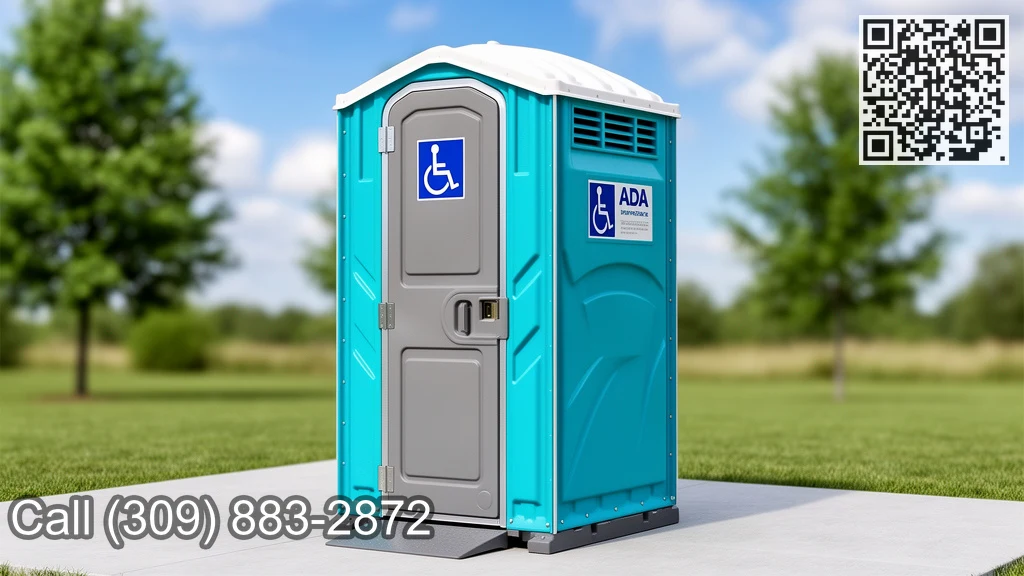
This is where website judgment can be found in. A site plan may look balanced on paper while still creating actual obstacles in method. If the easily accessible unit is technically within the overall event impact however functionally much where individuals are collecting, waiting, or seated, guests may have to take a trip further than others for a basic requirement. The ADA is not satisfied by token visibility. The accessible device requires to be component of the functional experience.
That is why discussions regarding ada portable bathroom demands must never stop at unit counts. The requirements deal with amount, yes, however additionally with route, entryway conditions, navigating clearances, and component clearances inside the unit.
What makes a mobile system accessible
An ada obtainable mobile restroom is not simply a bigger covering with a sticker on the door. The available portable device has to fulfill applicable bathroom room technical demands. That includes clearances at the fixture, turning space, and door handling clearances, along with suitable grab bar and water wardrobe clearance rules.
Those are not ornamental upgrades. They are the measurements and useful rooms that permit an individual to go into, turn, position, transfer, and departure securely. When an obtainable system is chosen appropriately, it is made around these technological needs. When it is chosen thoughtlessly, the label may exist while the interior usability drops short.
The system must likewise be related to the International Sign of Ease Of Access. This feels like a little factor up until you have watched guests check a long row of comparable devices from a range. Clear identification prevents complication and conserves time. It likewise signifies, prior to an individual reaches the door, that the system was planned to be component of the obtainable experience instead of an afterthought.
There is additionally a tendency in casual conversation to make use of a mix of phrases such as ada compliant available portable bathrooms, ada certified portable washrooms, and ada-compliant portable toilets mutually. That is fine in ordinary speech, but the real examination is not the phrase used in a quote demand. The test is whether the real system and its placement satisfy the ADA standards. A glossy rental description is not a substitute for compliance.
Placement is where many certified systems fail
An available system can be made correctly and still be severely put. This is among one of the most typical useful failures.
Portable easily accessible systems must have an available route and available entrance. If ramps or touchdowns are needed, those aspects also must abide by ADA technical demands. That indicates you can not simply drop an ada compliant portable commode anywhere the vehicle can dump it and think the job is done. If a wheelchair individual can not reach it along an accessible path, or can not approach the entrance in a useful means, the device might exist without being meaningfully available.
Think regarding what takes place on momentary websites. Ground problems alter. Rain develops ruts. Gravel shifts. Vendors ask for added space. Fencing gets moved. A path that looked acceptable at delivery can become hard by the time the public arrives. Short-term configurations need a final go through that treats the easily accessible path as a first-rate demand, not a box to examine throughout scheduling.
A few positioning problems should have special interest:
- placing the obtainable system on an incline or uneven surface
- tucking the unit behind typical commodes so the strategy is obstructed
- creating a course that goes across mud, loosened crushed rock, or various other unstable ground
- adding a ramp or landing without confirming it satisfies ADA technical requirements
- locating the only available system much from the task area offered by that cluster
These are not exotic edge cases. They occur regularly when placement decisions are made quickly or handed off without oversight. The solution is normally not dramatic. It is planning, measurement, and a determination to book the best place, not the remaining one, for the ada portable restroom.
Temporary events still count
One of the most consistent misconceptions in occasion preparation is that momentary means much less regulated. In my experience, individuals do not constantly state that out loud, yet they prepare as if it held true. They think a weekend event, an one day fundraiser, or a seasonal activation somehow obtains more flexibility than an irreversible facility.
The Access Board's analysis makes this factor clear for portable bathroom clusters: the obtainable device need uses also at short-lived events. Short-lived duration does not erase the demand for accessible cleanliness. If anything, short-lived events usually require more discipline due to the fact that the atmosphere is less predictable.
An outside craft fair is an example. The coordinator may be leasing all hygiene equipment for just 2 days. Due to the fact that nothing is long-term, every availability component depends on active selections. Where will the financial institution of systems go. Just how will guests reach it. Is the accessible portable washroom part of the exact same visitor path as whatever else, or does it require a detour around barriers and solution lanes. Those questions are not second. They are the work.
The exact same thinking puts on appear food occasions, road races, concerts, and municipal celebrations. Short-term logistics are still logistics. The ADA requirements do not disappear due to the fact that the occasion upright Sunday night.
Why "easily accessible somewhere" is not enough
I have discovered a pattern in website planning discussions. A person says, "We have an ADA device," singular, as though calling it settles the issue. Usually that system exists, however it may be affixed to the incorrect cluster, placed near a solution entryway instead of a visitor course, or divided from the location where the public really spends time.
This is where the 5 percent policy comes to be more than a number. It pushes organizers to assume cluster by cluster, not site wide in the abstract. If a place has several toilet collections because the footprint is large, ease of access needs to show up where the requirement shows up. Or else individuals with disabilities are successfully served by a various map than everybody else.
That creates useful problems others do not encounter. A parent going along with an impaired member of the family may need to leave a task early and take a trip further. A visitor might need to ask staff for instructions when others can simply follow the group. None of this is trivial. Accessibility to restrooms shapes whether individuals stay, participate, and feel welcome.
When you listen to expressions like ada handicap obtainable portable restroom in rental discussions, what individuals generally suggest is uncomplicated: they desire a system that can actually be made use of by people that need available features. The language might vary, yet the preparation responsibility stays the same. Location easily accessible devices where they offer people equitably, not just visibly.
The building website distinction
There is one area where individuals obtain perplexed due to the fact that they have heard partial info. The ADA standards distinguish portable commode devices at construction websites used exclusively by building personnel. Under the pointed out 1991 requirement, those devices are exempt from the mobile bathroom availability scoping requirement.
That slim difference does not erase the availability demand for general portable toilet services. It does not imply every jobsite is excluded in every circumstance, and it absolutely does not indicate public occasion rentals can disregard ease of access. It just suggests there is a certain, minimal difference in the standards that relates to building site devices used just by building and construction personnel.
This issues due to the fact that exemption language tends to spread out by word of mouth faster than context does. A professional hears "building and construction websites are excluded," and six conversations later a person intending a public street fair assumes the exact same rule uses. It does not.
If the mobile commodes belong to a general public event or public facing configuration, you should not rely on that building details difference as cover. The much safer and extra accurate strategy is to return to the real scoping and technological requirements that put on accessible mobile units.
Choosing the right location on a genuine site
The best placement decisions generally happen prior to the truck arrives. As soon as the device is on the ground, moving it may be possible, however it ends up being harder, slower, and more costly. Excellent planning starts with asking where people will in fact travel, queue, gather, and rest.
I like to think about available positioning as an issue of self-respect as high as conformity. If a bank of conventional units rests straight off the main pedestrian route, however the obtainable portable toilet is sent out to the side of the great deal since it is bigger and "harder to fit," the message is noticeable. The larger impact ought to set off earlier planning, not exile.
There is also a subtle design issue that turns up usually. In some cases the simplest dumping location is not the most effective public method area. Distribution benefit issues, yet it must not manage the last visitor experience. An unit that is easy to hand over yet tough to reach is a poor trade.
A useful testimonial prior to last placement normally assists:
- identify each cluster, not just the complete website count
- confirm at the very least 5 percent of solitary customer systems in each collection are accessible
- verify the available route and entryway to every obtainable unit
- check whether any kind of ramp or touchdown needed need to meet ADA technological requirements
- make sure the device is clearly noted with the International Icon of Accessibility
That short review catches lots of problems while they are still easy to take care of. It additionally assists when several groups are involved, such as an event organizer, a rental business, a site manager, and a centers organizer. Availability gaps frequently take place in handoffs.
What occupants must ask, and what service providers need to answer
A consumer preparing an ada portable commode service does not require to be a lawyer or code professional, however they do need clear solutions. Unclear assurances prevail in rapid moving leasings. "Yes, we have ADA systems" is a begin, not the finish.
The much better discussion seems extra specific. Which systems in which clusters will certainly come. Exactly how will certainly those devices be marked. What path will participants make use of to reach them. If a ramp or landing is entailed, has any person checked those problems versus ADA technical requirements. Is the available system positioned with the same idea provided to ease and presence as the typical units.
Providers that operate in this room frequently tend to recognize that a compliant system can still be poorly released. Consumers ought to expect that awareness. It is not quibbling. It is the distinction in between leasing tools and offering access.
For larger occasions, it additionally assists to take another look at placement soon before opening. Short-term sites are https://zanemnho309.fairmontdigest.com/posts/ada-portable-toilet-rental-what-counts-as-an-easily-accessible-unit liquid. Barriers move. Energies show up. Supplier cubicles increase. A last minute shift can unintentionally block the path to an ada certified mobile bathroom even if the initial placement was audio. Access needs one final set of eyes nevertheless the other items have actually settled.
Compliance is taking place in a more comprehensive environment
Accessibility enforcement does not exist in isolation. One appropriate trend is that ADA conformity is being enforced in a broader setting across industries. The Department of Justice provided support in April 2026 that expanded the due date for state and local government web and mobile ease of access guidelines to April 26, 2027 for bigger entities. That advancement is about digital availability, not mobile restrooms, but it reflects something essential: ADA conformity continues to be active, noticeable, and significantly on the radar.
Why reference that in a discussion regarding mobile units? Since it shows that access is not fading into the history as a reduced priority detail. Organizations are being asked, in several contexts, to take accessibility seriously and operationalize it. Physical access at momentary websites belongs in that exact same society of responsibility.
For communities, public companies, event marketers, and property supervisors, this wider environment needs to be a hint to tighten the essentials. If your team is currently assuming carefully concerning electronic access, public interaction, and inclusive services, the same self-control should apply to hygiene planning. An ada certified mobile washroom is one piece of a larger pattern: making sure individuals can actually participate.
The human side of placement decisions
The language of standards can seem completely dry, however the experience is not. When an available device is placed properly, many people barely discover the planning behind it. That is an excellent end result. The visitor who needs it can locate it, reach it, enter it, utilize it, and go on with their day.
When positioning goes wrong, the problem lands on the person that already has the least margins for hassle. They are the one searching much longer, taking a trip further, or asking for assistance in a setting where everybody else is relocating freely. That is why compassion belongs in compliance job. It hones judgment.
There is no merit in making availability complicated when the governing concepts are actually uncomplicated. Give the necessary number of available systems in each cluster. Usage devices that fulfill the appropriate toilet area technological demands. Mark them with the International Icon of Accessibility. See to it the available path and entryway are really accessible, and ensure any type of needed ramps or touchdowns fulfill ADA technical requirements.
That is the heart of ada portable toilet demands as they associate with positioning. Not symbolic accessibility, actual access. Not a device parked somewhere on site, a device individuals can reasonably and separately use. When coordinators deal with those information as vital instead of optional, easily accessible portable toilets quit being an afterthought and start doing what they are expected to do: serving the public with dignity.
 Ask ChatGPT
 Ask Grok
 Ask Perplexity
 Ask Claude
 Ask Google AI
 Ask You